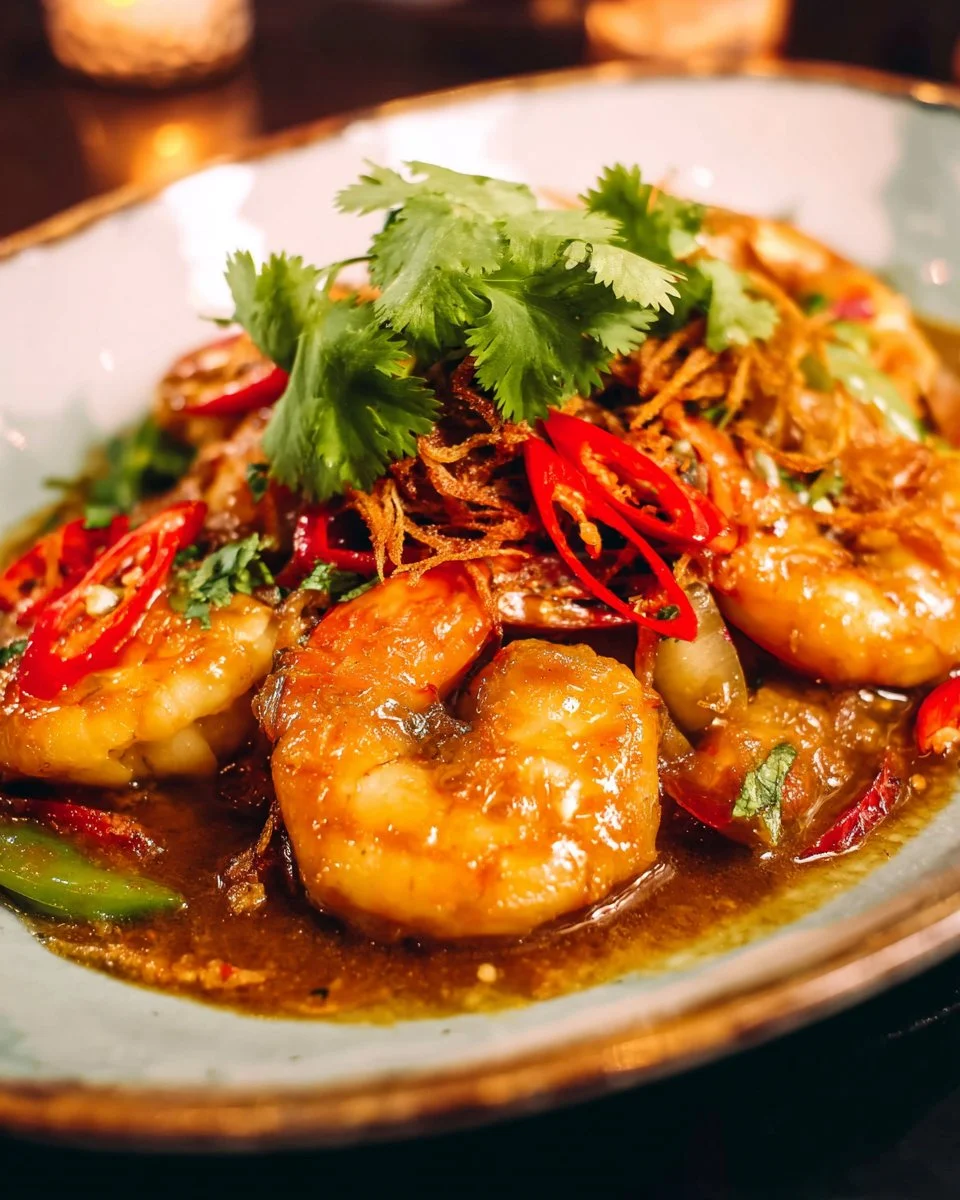
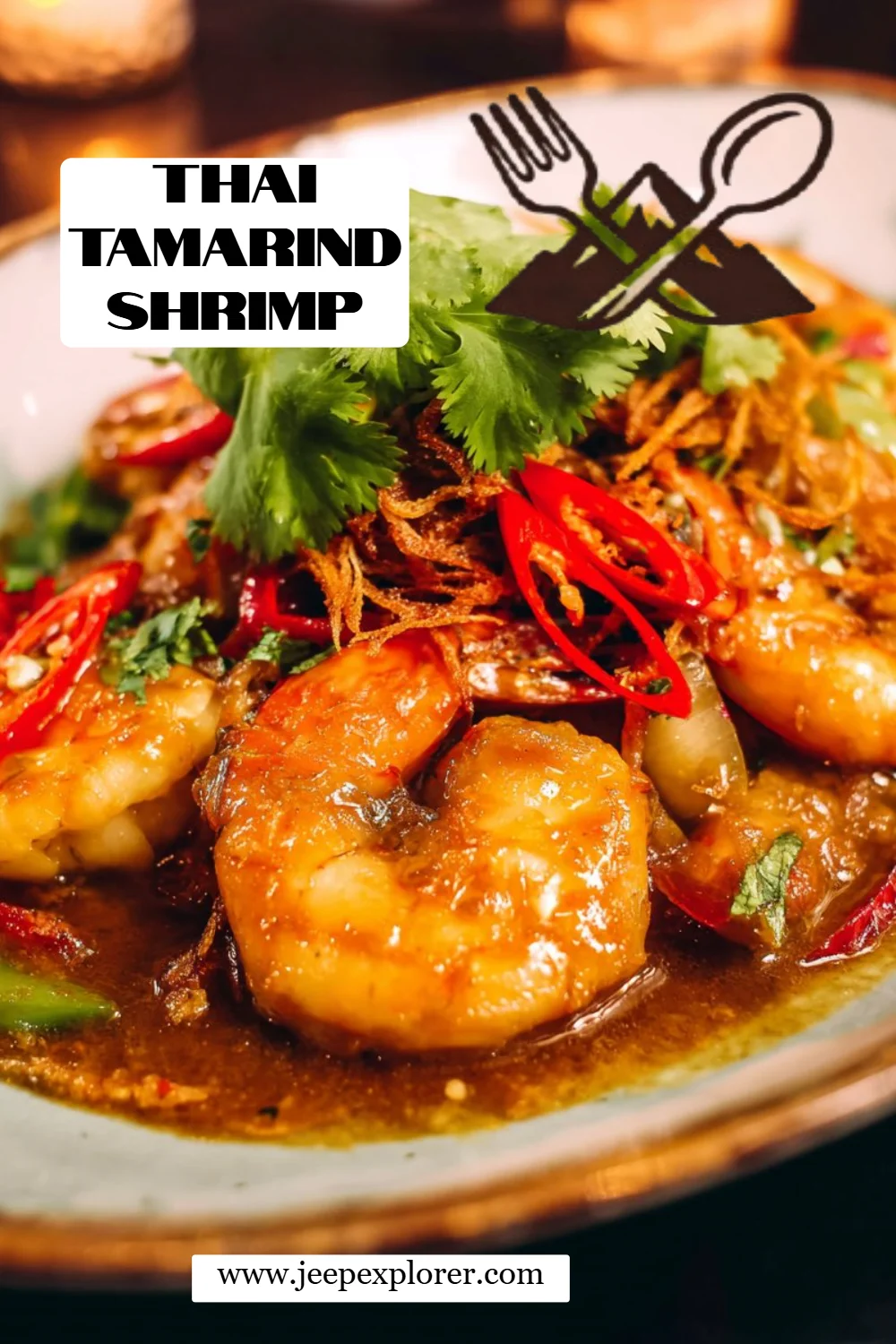
Zesty Thai Tamarind Shrimp: A Flavorful Journey You’ll Cherish
Growing up, family dinners were always a fantastic experience bursting with flavors, laughter, and heartfelt stories. One dish that captured my heart—and my palate—was my grandmother’s Thai Tamarind Shrimp. The first whiff of that heavenly combination of sweet-tart tamarind and succulent shrimp transported me to my childhood, standing at the stove beside her, mouth watering as we watched the magic unfold in the pan.
What makes Thai Tamarind Shrimp so special, you ask? It’s the perfect harmony of tangy and sweet, with a hint of spice that dances on your tongue. Unlike your typical shrimp dish, this recipe utilizes the unique depth of flavor that tamarind offers, truly elevating your seafood experience. Every bite is a reminder of family, comfort, and joy—a culinary hug, if you will.
Today, I promise to guide you through crafting this delightful dish, so you can create your own sweet memories just like I did. Together, we’ll uncover secrets to making Thai Tamarind Shrimp that’s better than anything else you’ve ever tasted, all while keeping it simple and easy to follow. Let’s dive in!
What Are Thai Tamarind Shrimp?
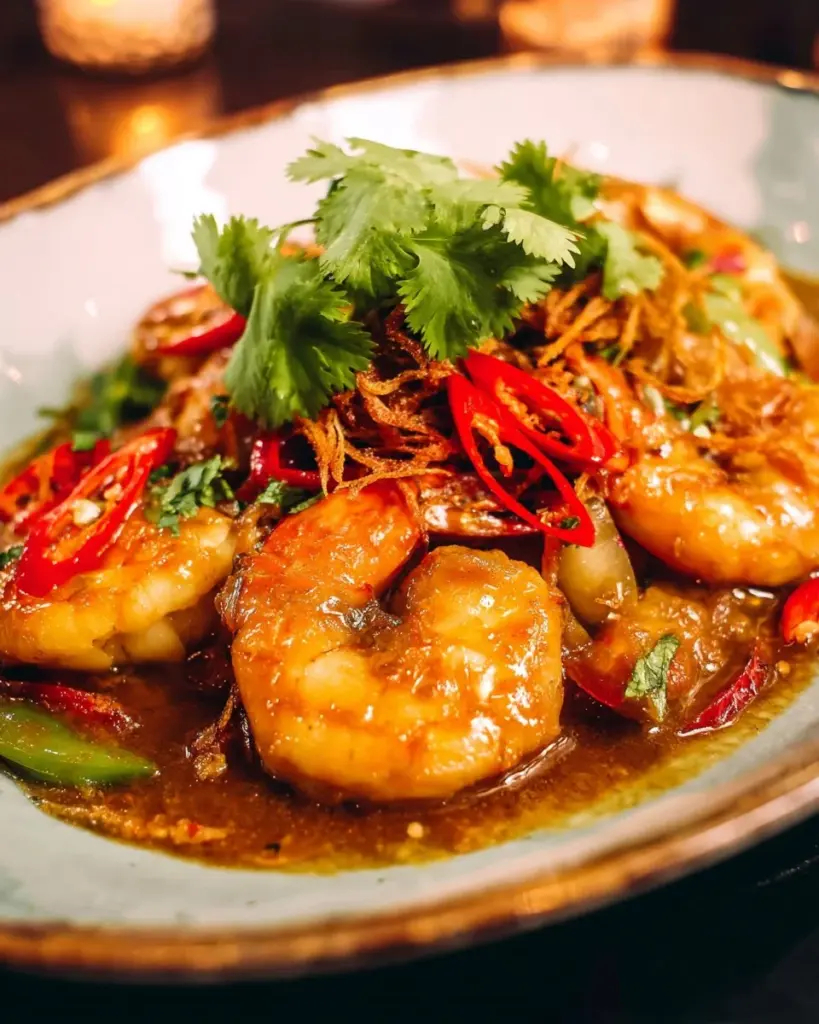
Thai Tamarind Shrimp is a culinary gem originating from Southeast Asia, where creative flavor combinations reign supreme. This dish harmoniously marries fresh shrimp with a bold tamarind sauce, creating an explosion of flavors that tantalize your taste buds. The shrimp emerges tender and juicy, enveloped in a luscious, slightly sticky sauce that is both sweet and tangy with a kick of spice.
The taste profile of Thai Tamarind Shrimp is nothing short of spectacular. Imagine the succulent shrimp, perfectly seared, mingling with a sauce that’s tart from tamarind, sweetened with palm sugar, and enhanced by the savory notes of fish sauce. It’s a unique ensemble that transforms ordinary dinner into an unforgettable feast!
A great time to make this dish is when you’re hosting friends or celebrating special occasions—its vibrant colors and delightful tastes are bound to impress. With the right ingredients and a little love, your kitchen will be the talk of the town!
Why You’ll Love This Recipe
Authentic Flavor: Forget store-bought versions—this recipe captures the essence of authentic Thai street food, using fresh, high-quality ingredients that truly shine.
Cost-Effective: Cooking at home allows you to create a restaurant-quality meal without breaking the bank. Fresh shrimp, common pantry staples, and a little effort can go a long way in saving dollars!
Customizable: Not a fan of too much heat? You can easily adjust the number of Thai chilies to suit your palate. Craving extra sweetness? Throw in another dollop of palm sugar!
Quick and Easy: This dish is not just delicious; it’s also a breeze to whip up in about 30 minutes, making it ideal for weeknight dinners or last-minute entertaining.
Family-Friendly: Enjoyed by adults and kids alike, you can serve Thai Tamarind Shrimp with a bowl of fluffy jasmine rice, making it a delightful meal the whole family will love.
Ingredients
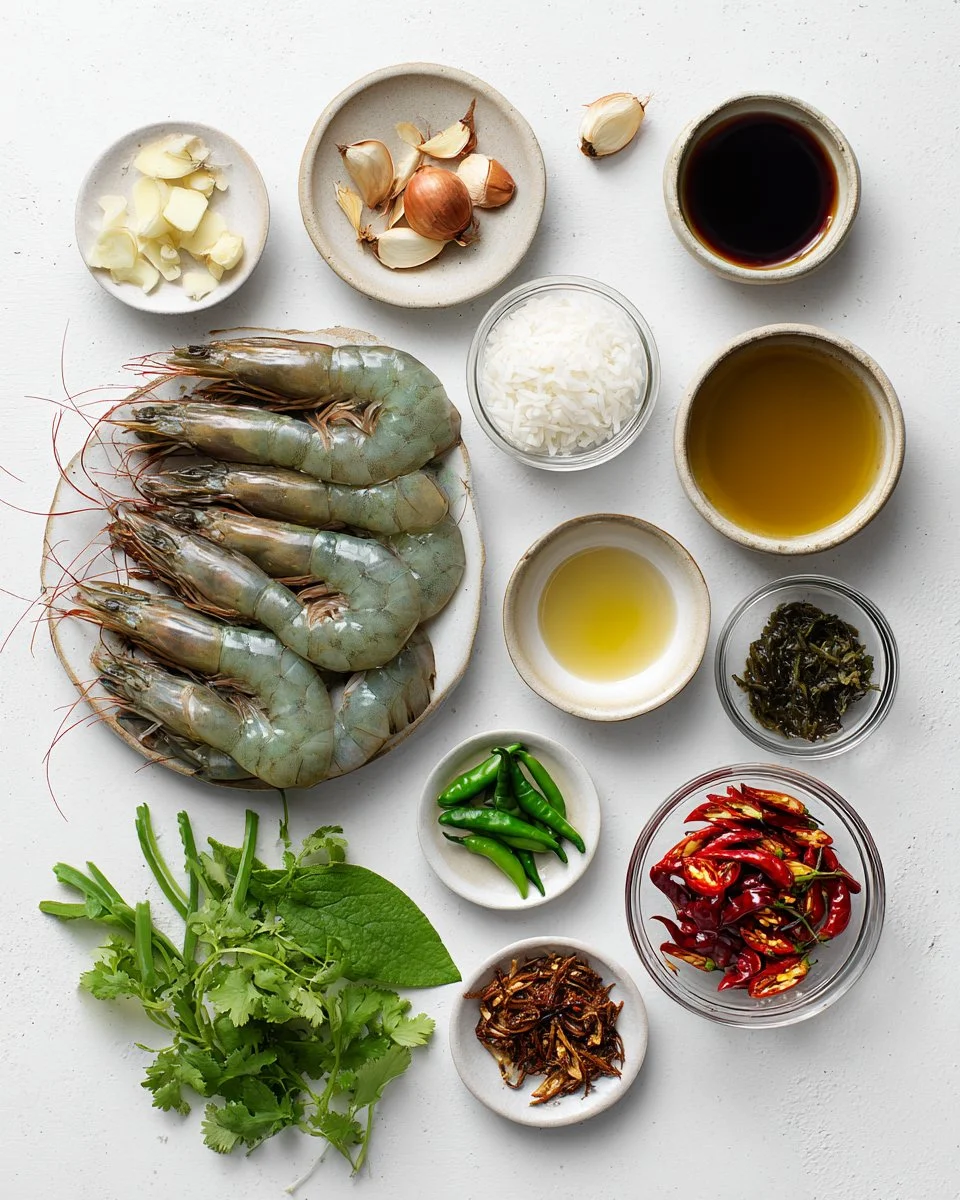
- 2 small shallots, roughly chopped
- 3 cloves garlic, minced
- 2 cilantro roots or 5 to 6 cilantro stems
- 2 Thai chilies, or to taste
- 250 g (9 oz) large shrimp, peeled and deveined
- ½ cup (120 ml) chicken stock or water
- 3 tablespoons (35 g) chopped palm sugar (feel free to adjust based on sweetness preference)
- 1.5 tablespoons (22.5 ml) fish sauce
- 3 tablespoons (45 ml) Thai tamarind paste (look for a good quality brand for best results)
- ¼ cup red and green chilies, sliced (optional for garnish)
- Fried shallots, optional but recommended
- Cilantro leaves for garnish
- Fried dried chilies for garnish (optional)
- Jasmine rice for serving
Notes on Ingredients
- High-Quality Shrimp: Always choose fresh or frozen shrimp with a firm texture for the best results in flavor and texture.
- Fresh Herbs: Fresh cilantro roots can enhance the dish’s authenticity; if unavailable, the stems work just fine.
- Tamarind Paste: Look for Thai brands for an authentic taste—this ingredient is the star of the show!
- Customization: Feel free to substitute palm sugar with brown sugar in a pinch, though the distinct flavor may differ slightly.
Prep Notes
Make sure your shrimp is thawed and your ingredients are prepped and ready to go before you begin cooking. A well-organized kitchen makes for seamless cooking!
Step-by-Step Instructions
Make the Herb Paste: Using a mortar and pestle (or a food processor), pound the garlic, shallots, cilantro roots, and Thai chilies into a rough paste. Give it a few good turns until it’s aromatic and delightful.
Chef’s Tip: Don’t skip this step! Crushing the herbs releases essential oils that enhance the flavor.
Sear the Shrimp: Heat 2 tablespoons of vegetable oil in a wok or sauté pan over medium-high heat. Add the shrimp and sear until browned and just cooked through, about 2-3 minutes. Remove the shrimp from the pan and set aside.
Visual Cue: Look for a pink hue and a slight firmness to indicate that the shrimp are cooked perfectly.
Cook the Paste: In the same pan, add fresh oil if needed, and toss in your fragrant herb paste. Sauté for about 1-2 minutes, allowing the aroma to waft through your kitchen.
Create the Sauce: Pour in the chicken stock, palm sugar, tamarind paste, and fish sauce. Stir until the sugar dissolves and the sauce thickens, which should take around 4-5 minutes.
Common Mistake to Avoid: Don’t leave the sauce unattended—it’s easy to over-reduce the liquid if you get distracted!
Combine and Serve: Return the shrimp to the pan and gently toss them in the sauce. If you feel they’re not fully cooked, let them simmer in the sauce for an additional minute or two. Finish with sliced chilies and turn off the heat.
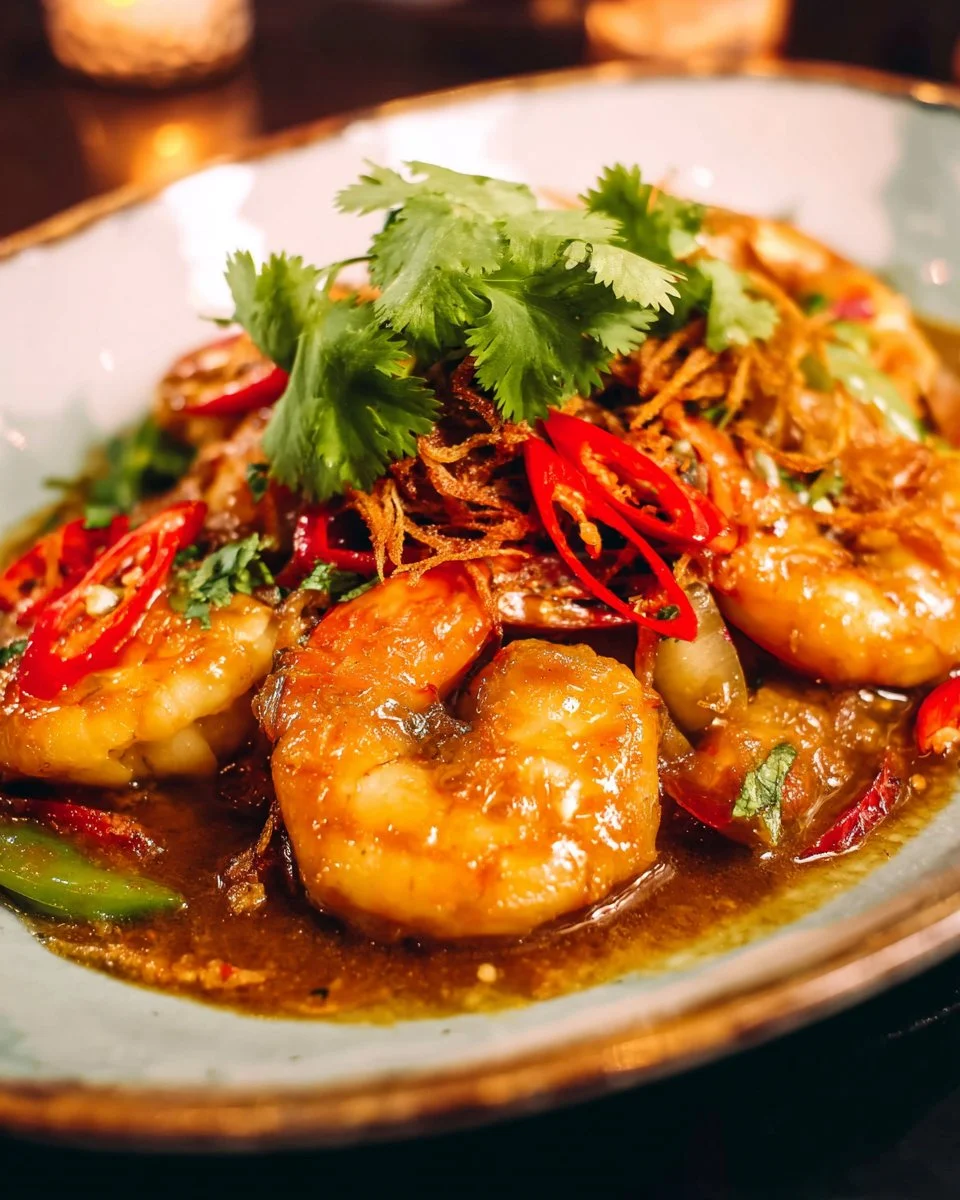
Plate It Up: Serve the shrimp over a generous portion of jasmine rice, sprinkle with fried shallots and fresh cilantro leaves. For a kick, add fried dried chilies on top.
Expert Tips & Tricks
Storage Recommendations: Leftovers can be stored in an airtight container in the fridge for up to 2 days, but it’s best enjoyed fresh.
Make-Ahead Instructions: You can prepare the herb paste a day in advance and store it in the fridge, making the cooking process even quicker.
Freezer Flexibility: If you have extra shrimp, consider cooking them fully, then freezing them in the sauce—great for a quick meal later on!
Troubleshoot Texture Issues: If your sauce turns out too thick, simply add a splash of water or chicken stock to loosen it up.
Heat Level Control: Adjust the number of Thai chilies according to your heat preference—taste as you go!
Enjoy Some Leftover Sauce: This sauce is fantastic over vegetables or even used as a marinade for meats or fish.
Serving Suggestions
For a complete meal, serve your Thai Tamarind Shrimp alongside a vibrant Asian-style slaw or fresh cucumber salad for a crunchy contrast. Presentation is key; serve the shrimp in a shallow bowl with a sprinkle of fried shallots and fresh herbs to create a stunning dish that’s sure to impress.
This dish is perfect for intimate gatherings or casual dinners with family—everyone will appreciate the gorgeous, colorful plating!
Variations & Substitutions
Vegetarian Option: Swap shrimp for firm tofu or jackfruit—cooking it in the same way will yield a refreshing take!
Seasonal Variations: In the summer, toss in some seasonal vegetables like snap peas or bell peppers for added freshness.
Different Flavors: Want to experiment? Try adding a teaspoon of lemongrass or ginger to the herb paste for a different twist.
Dietary Adaptations: Replace fish sauce with soy sauce for a vegetarian version—or try coconut aminos for a gluten-free option.
Nutrition & Storage Info
- Prep Time: 15 minutes
- Cook Time: 15 minutes
- Total Time: 30 minutes
- Yield: Serves 4
- Estimated Calories per Serving: Approximately 290 calories (not including rice)
Storage Instructions
- Room Temp: Best served immediately, but you can let it cool and keep it at room temperature for an hour.
- Fridge: Store refrigerated for up to 2 days.
- Freezer: Can be frozen for up to a month; thaw overnight before reheating.
FAQ Section
Can I use frozen shrimp?
- Absolutely! Just make sure to thaw them completely and pat them dry before cooking.
How do I know when the shrimp are done?
- Perfectly cooked shrimp will turn pink and opaque.
What can I substitute for tamarind paste?
- A mix of equal parts brown sugar and lemon juice is a good (though not identical) alternative.
How can I make this dish spicier?
- Add more Thai chilies or finish it off with a sprinkle of chili powder or flaked chili.
Can I meal prep this dish ahead of time?
- Yes! Prepare the sauce and veggies in advance; just add the shrimp when it’s time to cook.
Do I have to use palm sugar?
- If you can’t find palm sugar, light brown sugar is a great alternative.
Can leftovers be reheated?
- Yes, reheat gently on the stovetop or in the microwave. Add a splash of water to revive the sauce.
What’s a good side dish to serve with this?
- Jasmine rice is traditional, but you can also serve it with noodles or a simple stir-fried vegetable medley.
Why is my sauce too thick?
- If you over-reduce the sauce, add a bit of water to loosen it up.
Is this recipe gluten-free?
- Yes, just make sure to use gluten-free tamarind paste and fish sauce if required.
Conclusion
Thai Tamarind Shrimp is more than just a recipe—it’s an experience, a playful dance of flavors that’s bound to impress your friends and loved ones. With this easy-to-follow guide, you’ll prepare a meal that’s loved in my family, and I hope it finds a special place in yours too!
Please share your thoughts or any feedback as you try it out; I’m always eager to hear how each one of you makes it your own! Check out my other delicious recipes on the blog for more delightful culinary adventures. Happy cooking!
Thai Tamarind Shrimp
Ingredients
Method
- Make the Herb Paste: Using a mortar and pestle (or food processor), pound the garlic, shallots, cilantro roots, and Thai chilies into a rough paste.
- Sear the Shrimp: Heat 2 tablespoons of vegetable oil in a wok or sauté pan over medium-high heat. Add the shrimp and sear until browned and just cooked through, about 2-3 minutes. Remove shrimp from the pan and set aside.
- Cook the Paste: In the same pan, add fresh oil if needed, and toss in your fragrant herb paste. Sauté for about 1-2 minutes.
- Create the Sauce: Pour in the chicken stock, palm sugar, tamarind paste, and fish sauce. Stir until the sugar dissolves and the sauce thickens, which should take around 4-5 minutes.
- Combine and Serve: Return the shrimp to the pan and gently toss them in the sauce. If you feel they’re not fully cooked, let them simmer in the sauce for an additional minute or two. Finish with sliced chilies and turn off the heat.
- Plate It Up: Serve the shrimp over a generous portion of jasmine rice, sprinkle with fried shallots and fresh cilantro leaves.