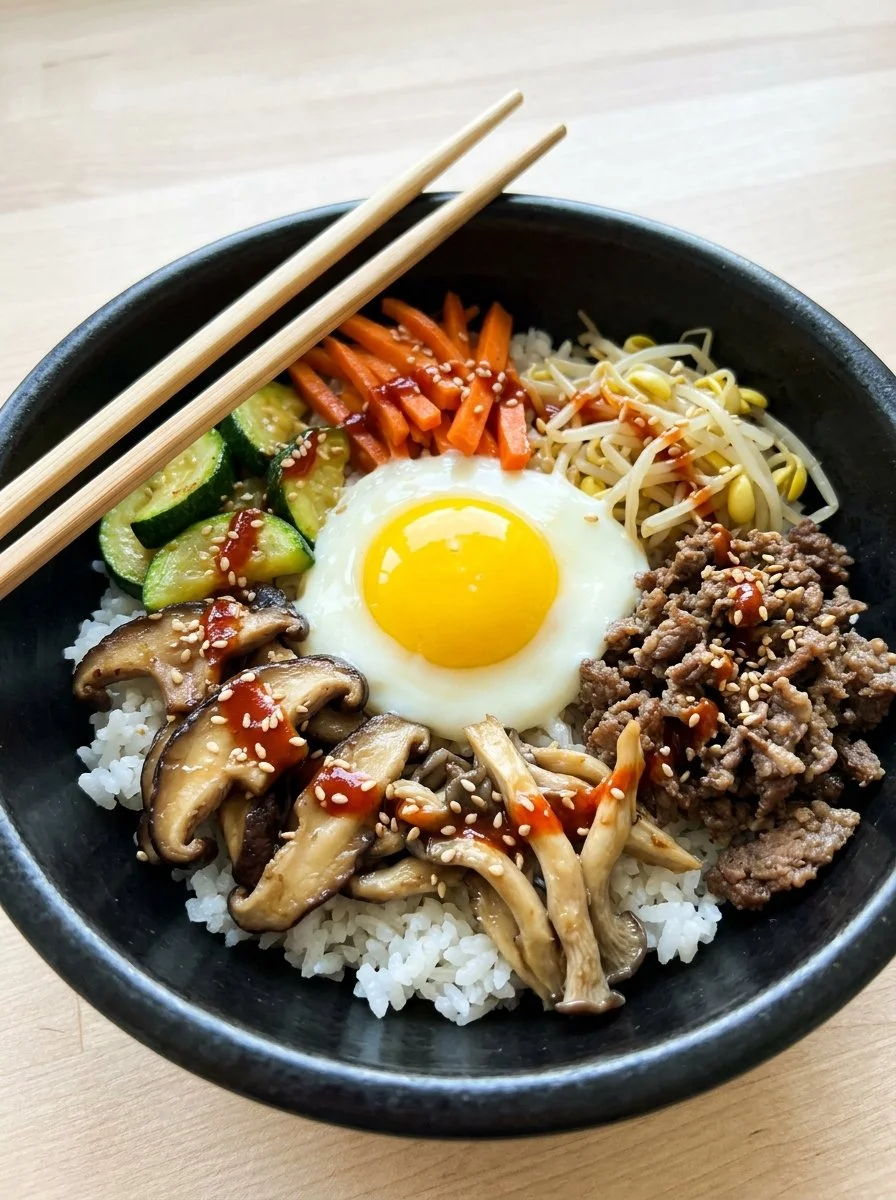
Experience the Bold Flavors of Bibimbap: A Korean Classic
The moment you dig your spoon into a bowl of bibimbap, the melodic sizzle of the hot stone bowl beckons. The fragrant aroma of sautéed vegetables and earthy gochujang wafts gently, each ingredient rich with color and texture. As you savor the first bite, the warm, sticky rice mingles with crisp vegetables and velvety egg, a harmonious explosion of flavor that dances on your palate.
The Origin & Heritage
Bibimbap, a vibrant and wholesome dish deeply rooted in Korean culture, is often celebrated as a versatile meal that exemplifies the art of balance in taste and nutrition. This iconic recipe traces its heritage to ancient Korean traditions, where communal sharing was the norm, symbolizing togetherness and harmony. I fondly recall my Grandma’s kitchen, filled with the sounds of sizzling vegetables and the wonderful scent of sesame oil, as she prepared bibimbap for our family. It wasn’t just a meal; it was a way to unite the family, preparing a plethora of colorful ingredients that each added their unique story to the bowl.
The Science of Flavor
- Umami Boost: The combination of sautéed mushrooms and sesame oil delivers a savory punch, enhancing the dish’s depth.
- Freshness Factor: Crunchy vegetables like carrots and cucumbers add brightness and a refreshing crunch that lightens the dish.
- Contrast Is Key: The richness of a fried or raw egg contrasts beautifully with the other ingredients, creating a balanced mouthfeel.
- Acidity’s Role: A sprinkle of vinegar or a dash of gochujang brings acidity, helping brighten the flavors and enhancing overall taste.
- Textural Variety: The harmony of soft rice, crisp veggies, and silky eggs creates a delightful medley of textures that make each bite exciting.
The Ingredients:
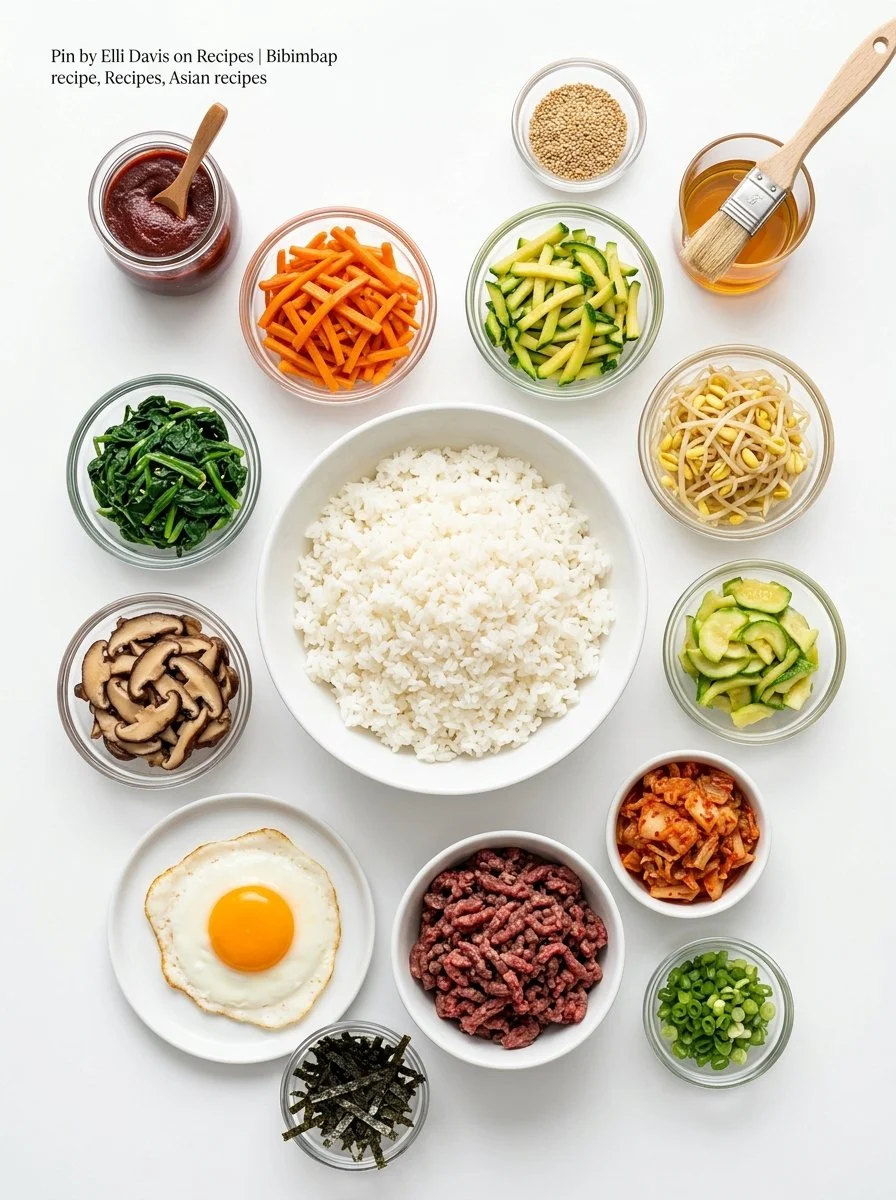
Essential Ingredients:
- Rice: Use short-grain white rice for the perfect chewy texture.
- Vegetables: Spinach, carrot, zucchini, and shiitake mushrooms.
- Protein: Traditional choice is beef, but you can use tofu or chicken.
- Gochujang: The essential spicy and savory Korean chili paste.
- Egg: A fried or poached egg is the finishing touch.
Pro-Note: Quality Hack
- Rice: Always rinse your short-grain rice until the water runs clear for fluffier grains.
- Gochujang: Choose a high-quality, naturally fermented gochujang for richer flavor without artificial additives.
The Masterclass Instructions
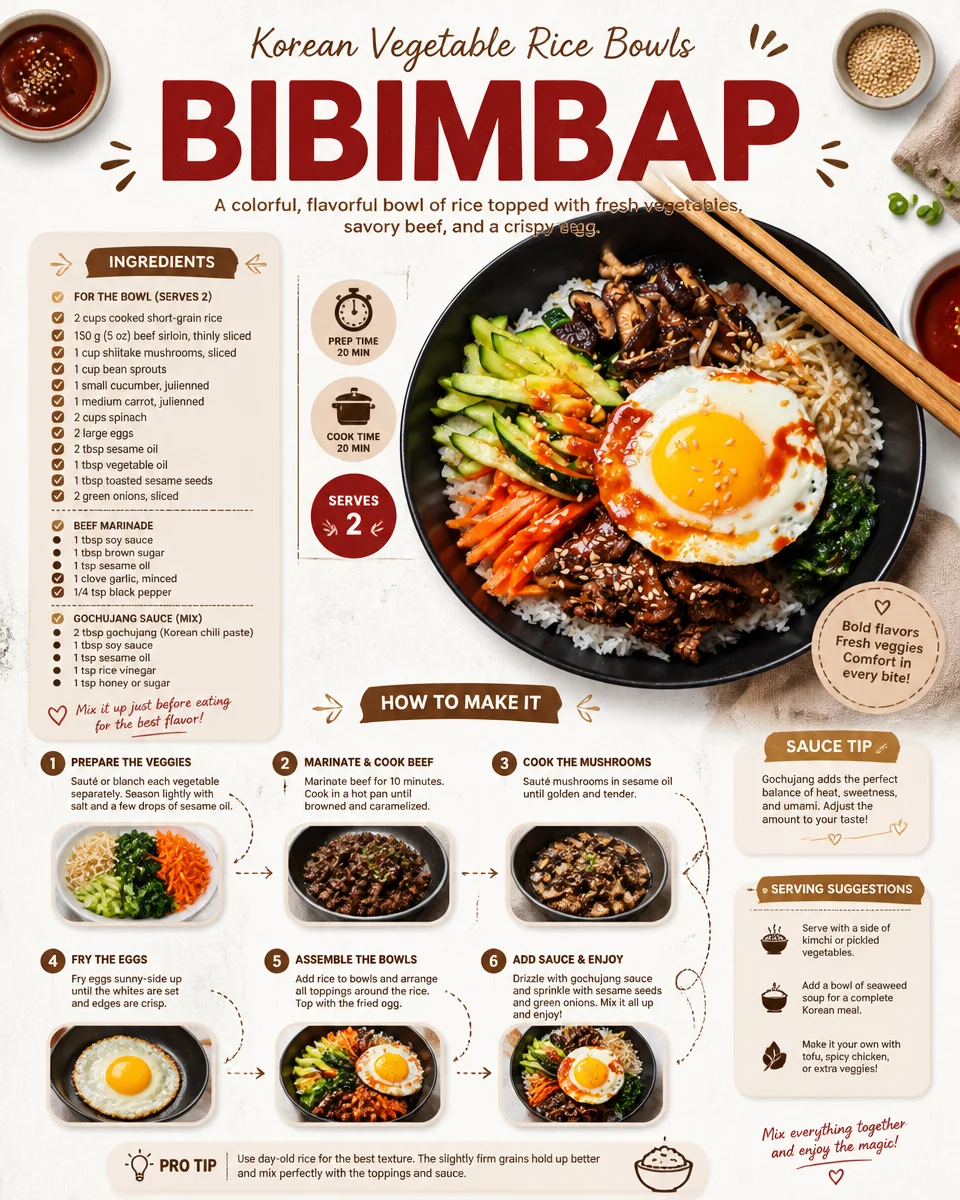
- Prep the Rice: Rinse 1 cup of short-grain rice until the water runs clear, then cook according to the package instructions.
- Sauté Vegetables: In a heavy-bottomed skillet, heat 1 tablespoon of sesame oil. Add the spinach and sauté until wilted, about 2 minutes. Remove and set aside.
- Carrots and Zucchini: In the same skillet, add thinly sliced carrots and zucchini. Sauté until tender but still crispy, about 3-4 minutes.
- Mushrooms: Next, add sliced shiitake mushrooms, cooking until golden brown, about 5 minutes.
- Cook Protein: If using beef or chicken, thinly slice and stir-fry in the skillet until just cooked. For tofu, cube and sauté until crispy.
- Fry the Egg: In a separate non-stick skillet, fry one egg sunny-side up, keeping the yolk runny.
- Assemble Your Bibimbap: In a stone bowl or a regular bowl, place a serving of rice at the bottom. Arrange the sautéed vegetables, protein, and top with the fried egg.
- Garnish: Drizzle gochujang over the top and sprinkle with sesame seeds and green onions.
- Serve Hot: Mix everything together before eating for a blend of flavors and textures.
A Healthier Perspective
- Swap Refined Sugars: Use monk fruit or honey to sweeten the dish naturally if desired.
- Add Seeds: Sprinkle chia or flax seeds for extra fiber and omega-3s.
Health Benefits: Spinach, a key ingredient, is rich in vitamins A, C, and K, promoting healthy skin, eyesight, and bone health.
The Troubleshooter
- Why did my vegetables go soggy? Make sure the pan is hot before adding vegetables, and avoid overcrowding them in the skillet.
- My rice turned out mushy. Why? Rinsing off excess starch before cooking is critical for achieving the right texture.
- The gochujang flavor is too overpowering. What can I do? Dilute it with a bit of sesame oil or add more neutral vegetables to balance out the spiciness.
The Art of Serving
Plating is an essential part of enjoying bibimbap. Serve in a warmly colored bowl, arranging the ingredients with care to showcase their colors. Pair with a light, fruity Korean soju or a refreshing iced barley tea for the perfect accompaniment. Enjoy your bibimbap in a cozy setting—perhaps during a family gathering or a quiet dinner at home.
The Dietary Lab
Vegan Option: Substitute beef or egg with marinated tofu or a vegan scramble.
Gluten-Free: Ensure your gochujang and soy sauce are gluten-free, or use tamari instead.
Keto: Replace rice with cauliflower rice and increase the vegetable portion.
Storage & Revival
- Yield: 2 servings
- Prep Time: 20 minutes
- Cook Time: 20 minutes
The Revival Rule: To reheat bibimbap, place it in a preheated oven at 350°F for about 10 minutes until warmed through, avoiding the microwave to maintain the crispy texture of the vegetables.
Frequently Asked Questions
What type of rice is best for bibimbap?
Short-grain white rice is best for its sticky texture that holds all the ingredients together.
Can I make bibimbap ahead of time?
Yes, you can prepare each component ahead of time and assemble when ready to serve.
Is bibimbap healthy?
Absolutely! It’s packed with vegetables, protein, and healthy fats, making it a balanced meal.
Can I use frozen vegetables?
While fresh vegetables are preferable, you can use frozen veggies if that’s what you have on hand.
How spicy is bibimbap?
The spice level depends on the amount of gochujang used; you can adjust it to your preference.
What can I use instead of gochujang?
In a pinch, you can use chili paste mixed with a touch of honey for sweetness.
How do I store leftovers?
Keep leftovers in an airtight container in the refrigerator for up to 3 days.
Can bibimbap be served cold?
While traditionally served hot, bibimbap can also be enjoyed cold, especially in summer.
Are there variations of bibimbap?
Yes! Many regions in Korea have their own take on bibimbap, featuring local ingredients.
How do I know if my egg is cooked properly?
A sunny-side-up egg should have a set white with a slightly runny yolk for the best flavor combination.
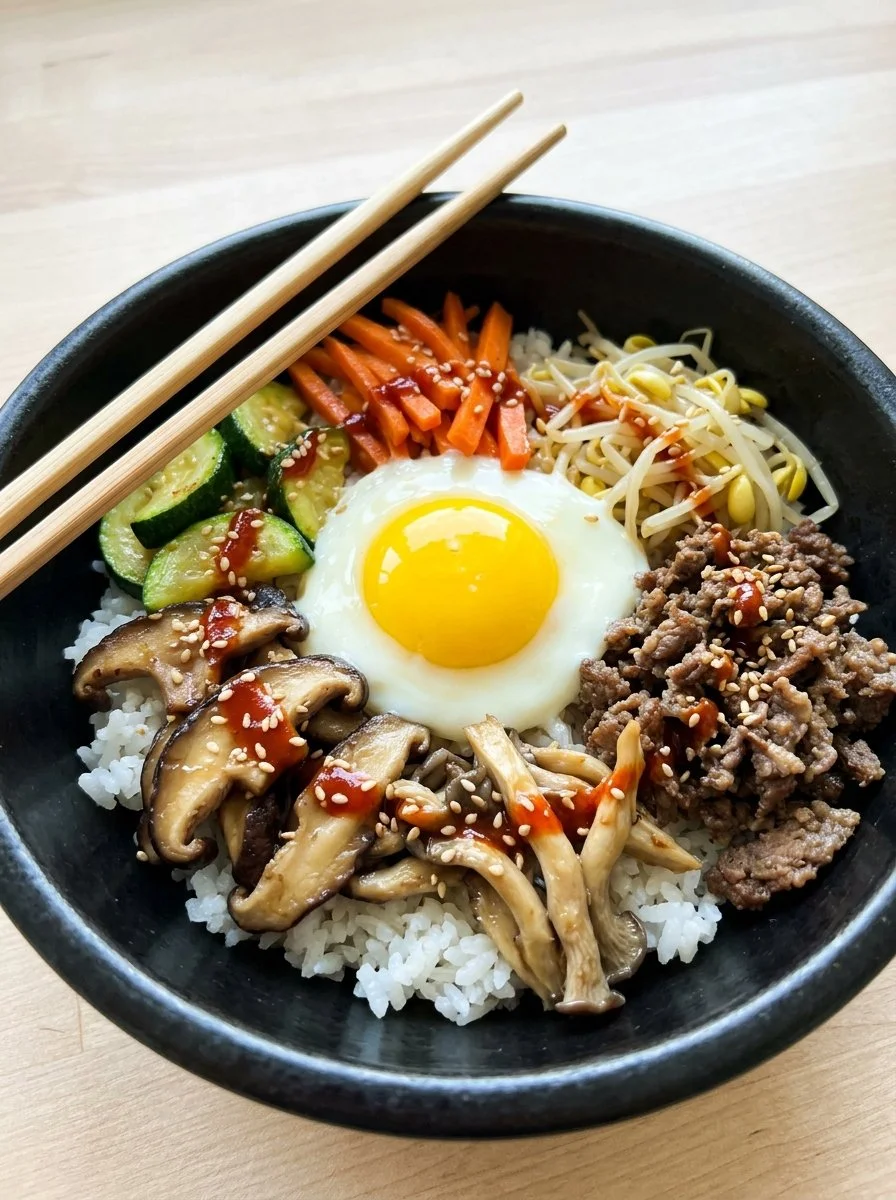
The vibrant colors and delightful combinations in bibimbap offer a unique culinary experience that is both satisfying and nutritious. Don’t hesitate to leave a comment below if you tried the Bibimbap recipe! For more delicious options, check out my recipes for Korean Kimchi Jjigae, Spicy Tofu Stir-Fry, and Korean BBQ Galbi.
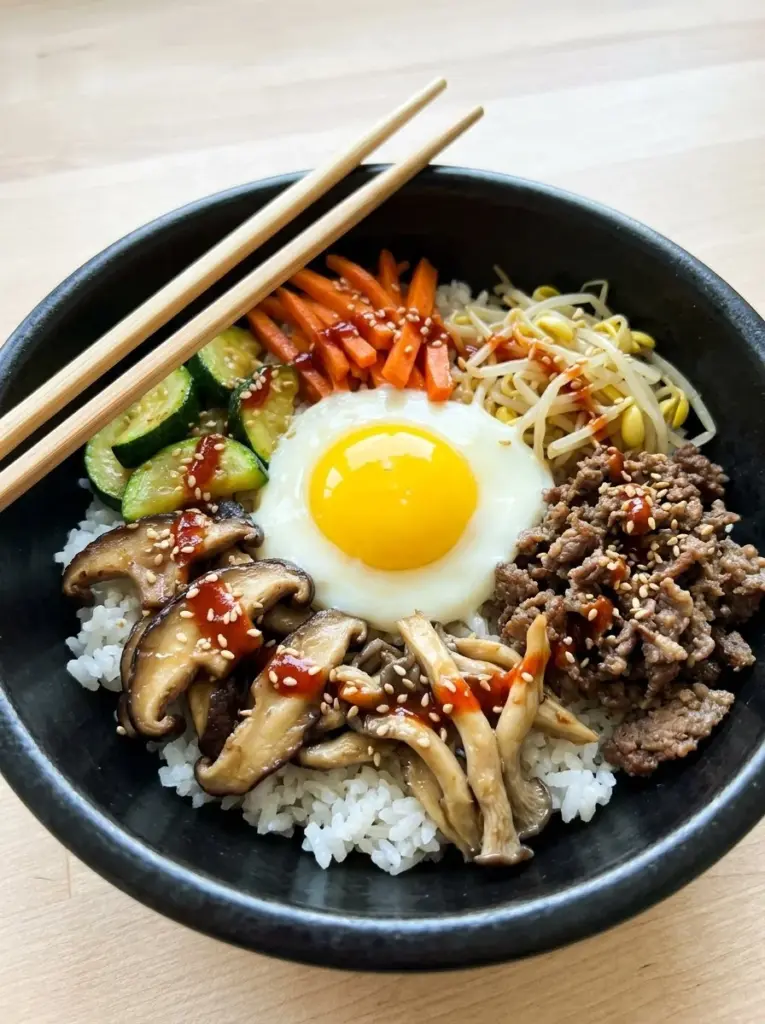
Bibimbap
Ingredients
Method
- Rinse 1 cup of short-grain rice until the water runs clear, then cook according to the package instructions.
- In a heavy-bottomed skillet, heat 1 tablespoon of sesame oil. Add the spinach and sauté until wilted, about 2 minutes. Remove and set aside.
- In the same skillet, add thinly sliced carrots and zucchini. Sauté until tender but still crispy, about 3-4 minutes.
- Next, add sliced shiitake mushrooms, cooking until golden brown, about 5 minutes.
- If using beef or chicken, thinly slice and stir-fry in the skillet until just cooked. For tofu, cube and sauté until crispy.
- In a separate non-stick skillet, fry one egg sunny-side up, keeping the yolk runny.
- In a stone bowl or a regular bowl, place a serving of rice at the bottom. Arrange the sautéed vegetables, protein, and top with the fried egg.
- Drizzle gochujang over the top and sprinkle with sesame seeds and green onions.
- Mix everything together before eating for a blend of flavors and textures.