Savor the Flavor: Ultimate Vegan Bibimbap Recipe to Make You Smile
THE SENSORY HOOK:
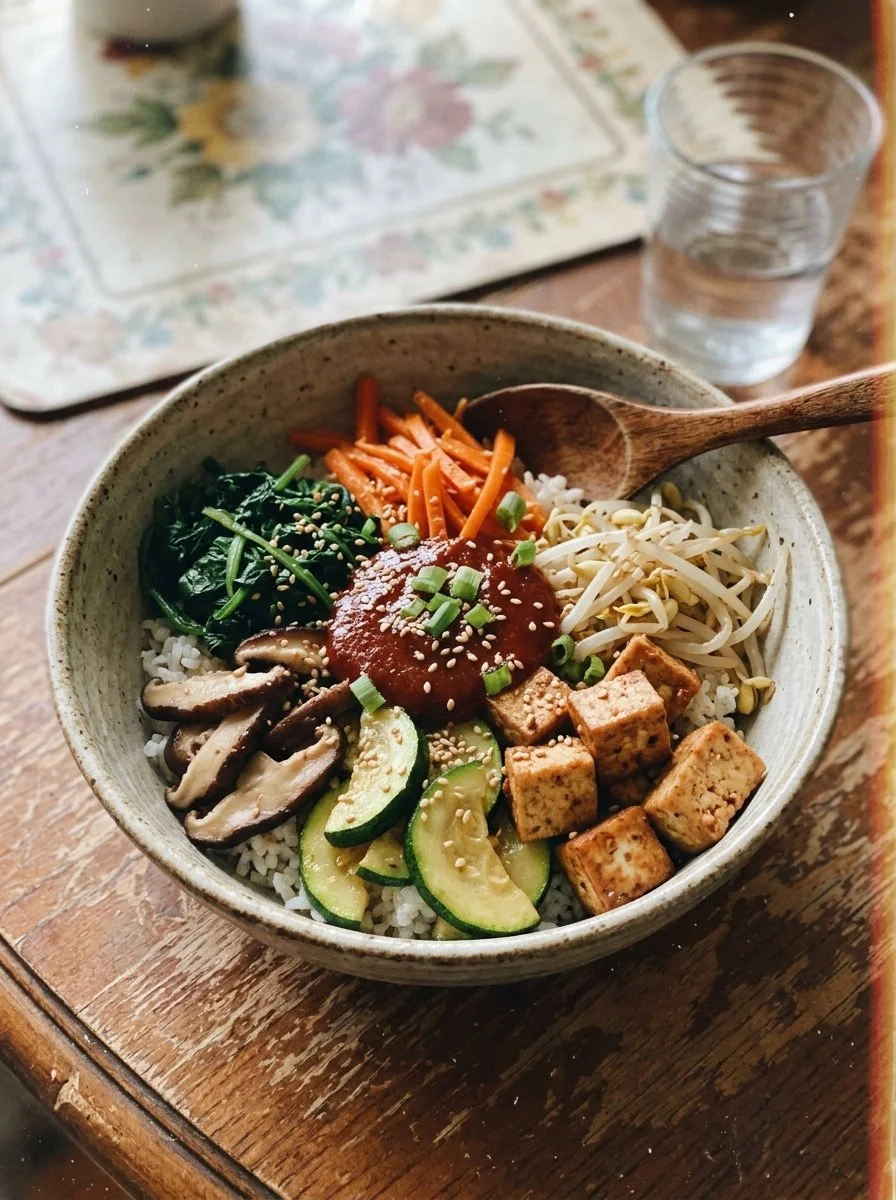
The moment you dig your spoon into the vibrant bowl of Vegan Bibimbap, you hear the satisfying crunch of fresh vegetables mixing harmoniously with the tender tofu. Aromas of sesame oil and garlic waft through the air, teasing your taste buds with promises of umami-rich flavors. As you take your first bite, the crisp snap of cucumber, the earthy bite of mushrooms, and the delightful heat from gochujang create a delightful explosion of textures and tastes that have you craving more.
THE ORIGIN & HERITAGE:
Bibimbap has its roots in Korea, where it blossomed from humble beginnings into a national dish celebrated for its vibrant colors and complex flavors. Traditionally served as a way to utilize leftover ingredients, bibimbap embodies the spirit of cooking: love, resourcefulness, and family. I still remember the comforting smells from my grandmother’s kitchen as she would prepare her version of this dish, meticulously arranging each ingredient—a ritual that brought the family together. The juxtaposition of textures and tastes reflects the love poured into each bowl, making it a nostalgic meal that warms the heart.
THE SCIENCE OF FLAVOR:
- Contrast of Textures: The crunch of fresh veggies pairs perfectly with the softness of tofu, creating a satisfying mouthfeel.
- Umami Blend: The enzymes in the mushrooms and gochujang amplify the savory umami notes, enriching the dish.
- Complementary Seasons: The vibrancy of the vegetables is enhanced by the nuttiness of sesame oil and depth of garlic.
- Balanced Heat: Gochujang’s spiciness is tempered by sweet agave/maple syrup, achieving a balanced flavor profile.
- Acidic Brightness: The rice vinegar cuts through richness, adding a zesty layer that lifts the overall taste.
THE INGREDIENTS:
Fresh Vegetables:
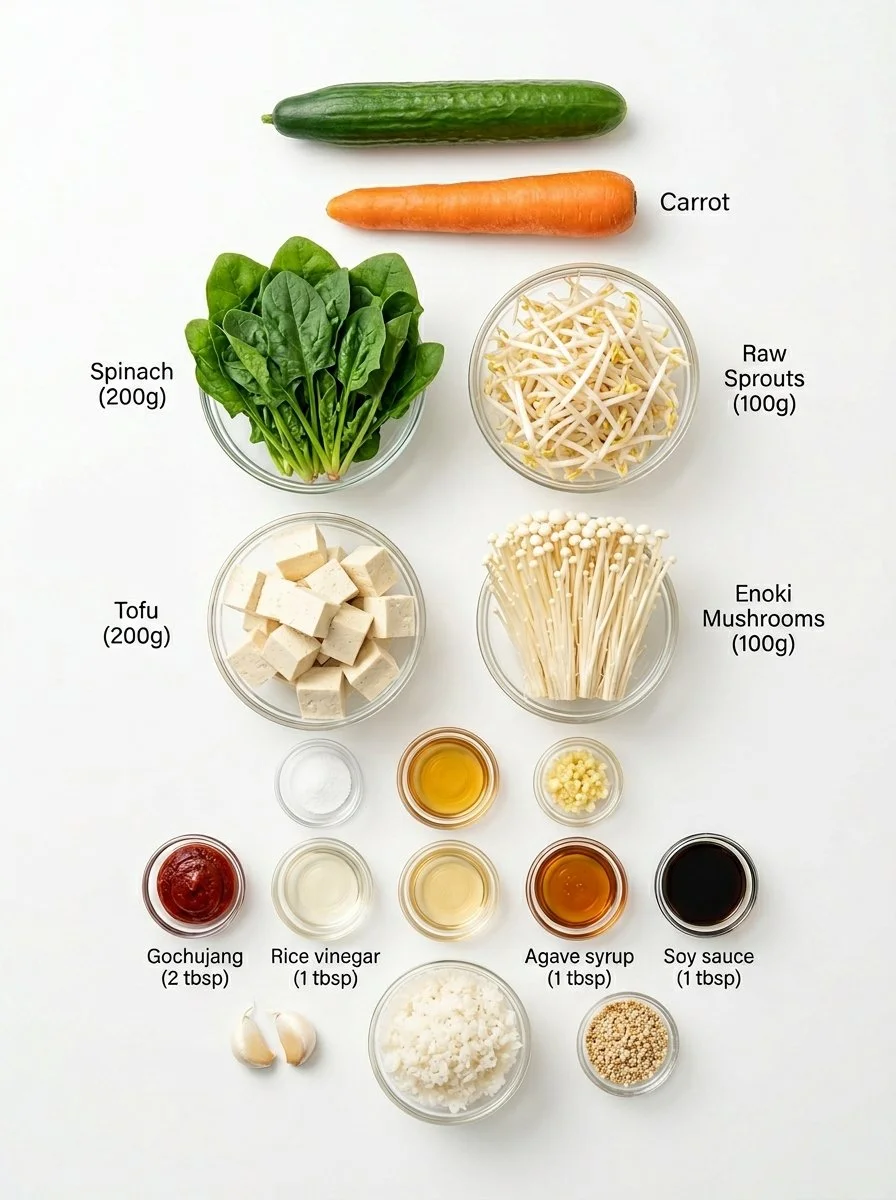
- 1 cucumber
- 200 g spinach
- 100 g bean sprouts
- 1 carrot
- 100 g mushroom of choice (I used enoki mushrooms)
Tofu & Seasonings:
- 200 g firm tofu
- Salt
- Sesame oil
- 2 clove garlic, minced
Gochujang Sauce:
- 2 tbsp gochujang
- 1 tbsp rice vinegar
- 1 tbsp agave/maple syrup
- 1 tbsp soy sauce
- 2 tsp sesame oil
Other:
- Rice, for serving
- Sesame seeds for garnish
Quality Hack:
- Tofu: Press your tofu before cooking to ensure a firmer texture that absorbs flavors well.
- Vegetables: Opt for organic produce to elevate freshness and nutritional value.
THE MASTERCLASS INSTRUCTIONS:
Step 1: Prepare the Vegetables
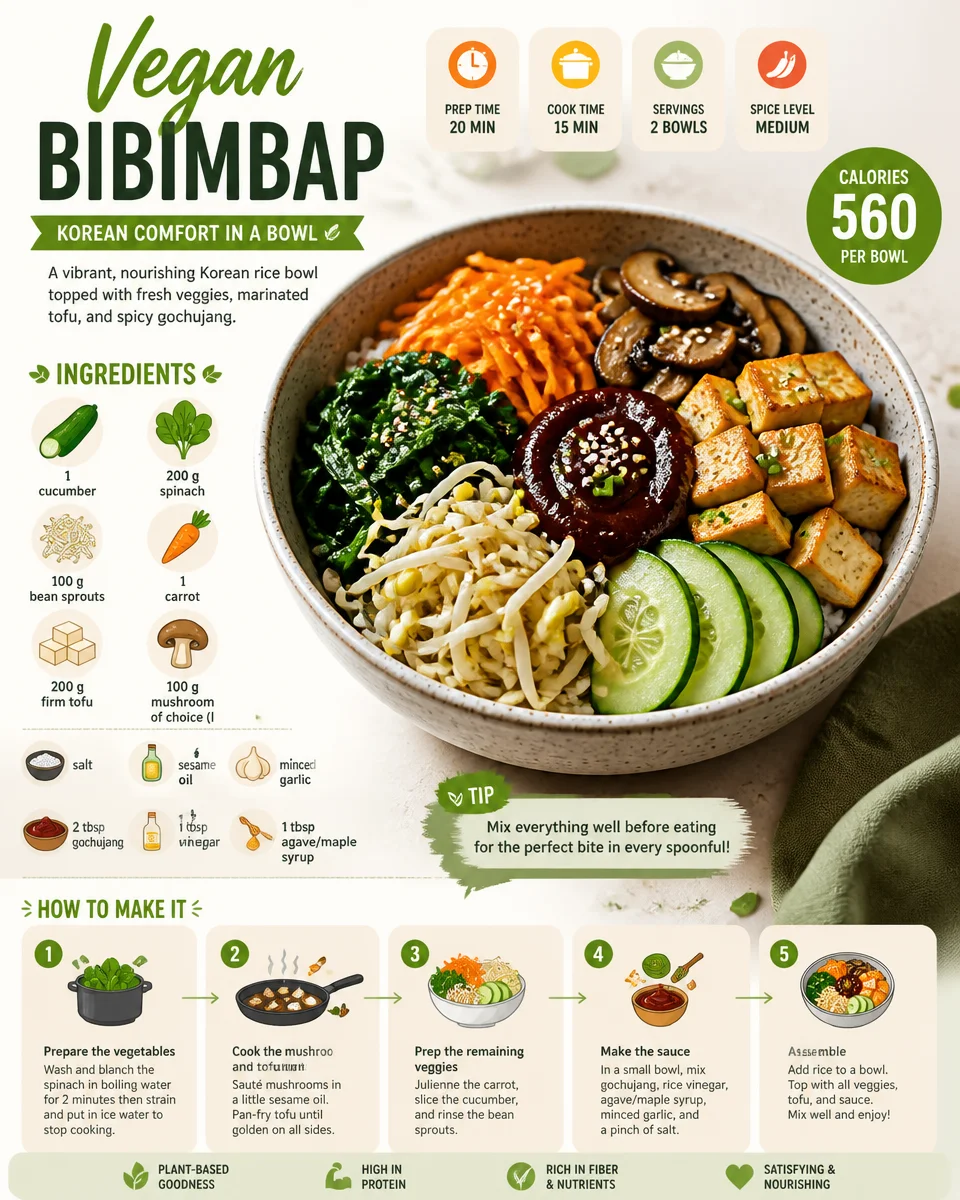
Start by washing all your vegetables thoroughly. Julienne the cucumber and carrot for a beautiful presentation. Blanch the spinach and bean sprouts for a minute until tender, then transfer them to ice-cold water to maintain their bright colors.
Step 2: Prepare the Tofu
Slice the firm tofu into bite-sized cubes. Heat 2 tablespoons of sesame oil in a heavy-bottomed cast iron skillet over medium heat. Add the minced garlic and sauté until aromatic, then add the tofu cubes. Cook until golden brown on all sides, about 8-10 minutes. Season with salt to taste.
Step 3: Prepare the Gochujang Sauce
In a small mixing bowl, combine gochujang, rice vinegar, agave/maple syrup, soy sauce, and sesame oil. Mix until smooth, adjusting the sweetness or spice to your liking.
Step 4: Assemble the Vegan Bibimbap Bowl
In each serving bowl, add a generous scoop of rice. Arrange the blanched spinach, bean sprouts, julienned cucumber, carrot, and sautéed tofu on top. Drizzle generously with gochujang sauce, and finish with a sprinkle of sesame seeds.
HEALTH & NUTRITION CORNER:
A Healthier Perspective
To further boost the nutritional value of your Vegan Bibimbap, consider these tips:
- Add seeds for extra fiber: Chia or hemp seeds can pack a nutritional punch.
- Use brown rice or quinoa: These can enhance fiber content and provide additional nutrients.
Health Benefits of Spinach:
Spinach is a powerhouse of vitamins A and C, as well as iron and antioxidants. Regular consumption can contribute to improved eye health and reduced oxidative stress.
THE TROUBLESHOOTER:
Why is my tofu soggy?
Always press your tofu before cooking to remove excess moisture. This helps achieve a crispy texture.Why are my vegetables soggy?
Ensure you blanch your vegetables for just a minute and immediately place them in ice-cold water. This keeps them crisp.Why does my gochujang sauce taste bland?
Adjust the balance of sweet and spicy. Add a little more agave/maple syrup or soy sauce to enhance the flavor.
THE ART OF SERVING:
For an impressive plating, layer the ingredients in harmonious sections on top of the rice, showcasing the colors of each vegetable. Pair your Vegan Bibimbap with a refreshing iced herbal tea or a chilled rice drink to keep the meal light. Enjoy it with loved ones on a cozy evening for the ultimate culinary experience.
THE DIETARY LAB:
- Vegan: This recipe is inherently vegan-friendly, using plant-based ingredients.
- Gluten-Free: Ensure you use gluten-free soy sauce to adhere to this dietary choice.
- Keto: Substitute rice with cauliflower rice for a low-carb alternative.
STORAGE & REVIVAL:
- Yield: 2-3 servings
- Prep Time: 20 minutes
- Cook Time: 30 minutes
The Revival Rule:
To reheat your Vegan Bibimbap, use an oven or air fryer at 350°F (175°C) for about 10 minutes until warmed through. Avoid using a microwave as it can make the vegetables rubbery.
Frequently Asked Questions
Why is my Bibimbap not colorful?
Add variety! Use different colored vegetables, such as bell peppers or radishes, to enhance visual appeal.
Can I substitute ingredients?
Absolutely! Feel free to replace tofu with other proteins like tempeh or seitan.
What can I use instead of gochujang?
Try miso paste or a homemade chili paste mixed with a little sugar for a similar flavor profile.
Can Bibimbap be made ahead of time?
Certainly! Pre-cook your ingredients and store separately in the fridge. Assemble just before serving.
What’s the best way to store leftovers?
Keep leftovers in an airtight container in the fridge for up to 2 days. Reheat as instructed.
Is Bibimbap always served cold?
Traditionally, it’s served warm, but you can enjoy it hot or at room temperature based on your preference.
How spicy is this recipe?
It’s adjustable! The heat depends on how much gochujang you add, so tailor it to your spice tolerance.
What type of rice works best?
Short-grain rice is traditional, but you can also use medium-grain or brown rice for added texture.
Can Bibimbap be made gluten-free?
Yes! Use gluten-free soy sauce and ensure your gochujang doesn’t contain gluten.
How do I make it more filling?
Add more protein sources, such as edamame or quinoa, to enhance satiety and nutrition.
The last bite of your Vegan Bibimbap is not just a meal; it’s a delightful experience of flavors, textures, and a story waiting to be shared. Leave a comment below if you tried the Ultimate Vegan Bibimbap Recipe! For related recipes, check out Crispy Tofu Stir-Fry, Veggie-Packed Japchae, and Spicy Korean Noodles.
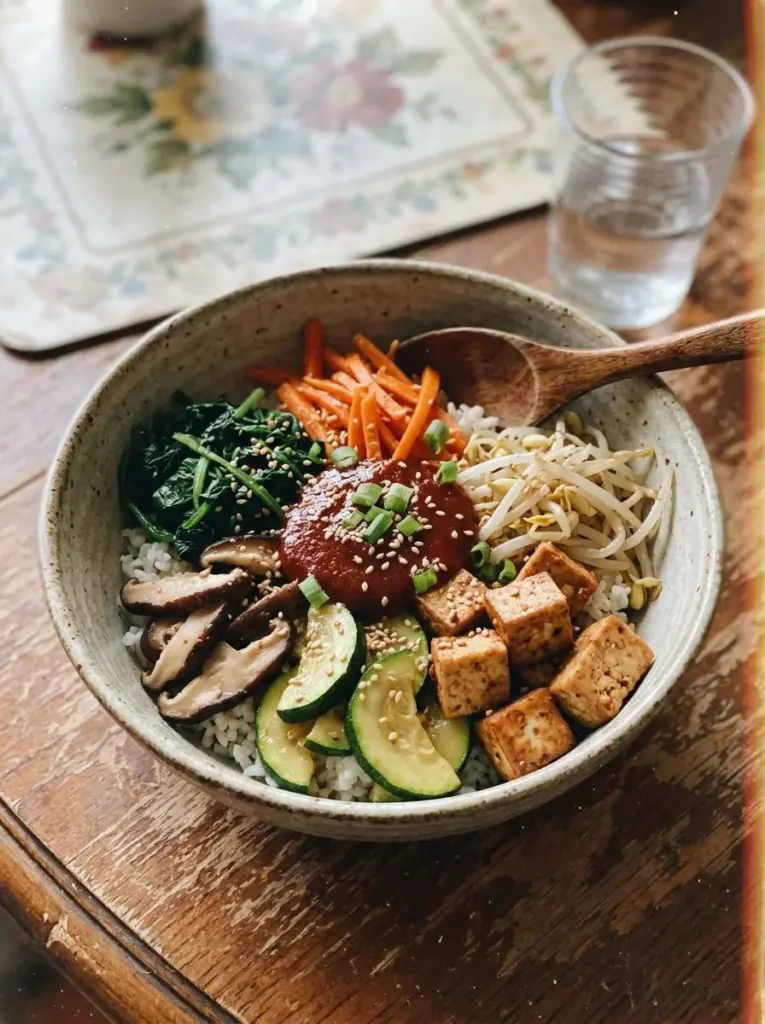
Vegan Bibimbap
Ingredients
Method
- Wash all your vegetables thoroughly. Julienne the cucumber and carrot.
- Blanch the spinach and bean sprouts for a minute until tender, then transfer them to ice-cold water.
- Slice the firm tofu into bite-sized cubes.
- Heat 2 tablespoons of sesame oil in a skillet over medium heat. Add the minced garlic and sauté until aromatic.
- Add the tofu cubes. Cook until golden brown on all sides, about 8-10 minutes. Season with salt to taste.
- In a small mixing bowl, combine gochujang, rice vinegar, agave/maple syrup, soy sauce, and sesame oil. Mix until smooth.
- In each serving bowl, add a scoop of rice.
- Arrange the blanched spinach, bean sprouts, julienned cucumber, carrot, and sautéed tofu on top.
- Drizzle generously with gochujang sauce, and finish with sesame seeds.