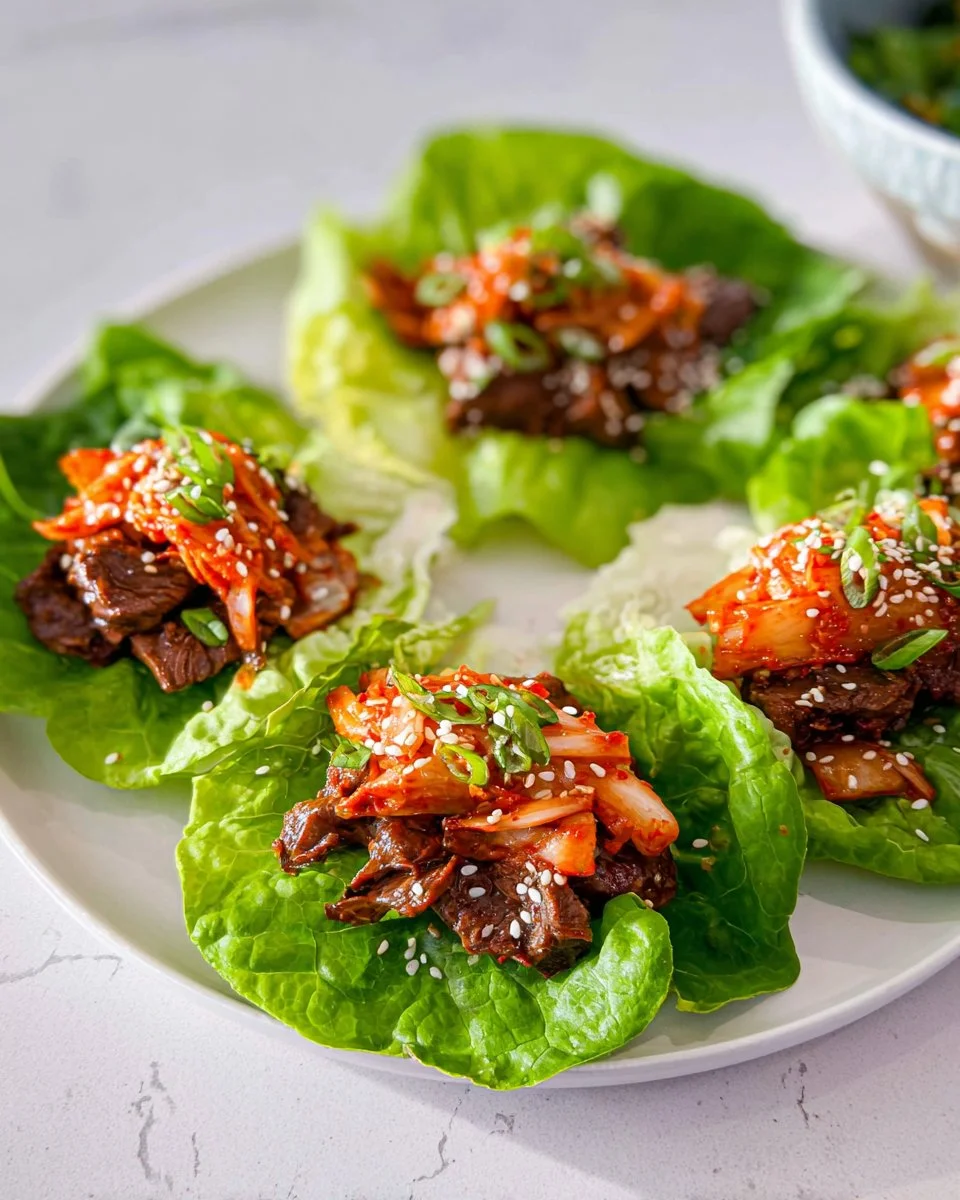
Growing up in a multicultural family, mealtimes were filled with an array of flavors and memories. From the sizzling sound of homemade bulgogi to the fragrant aroma of garlic wafting through the kitchen, my favorite moments revolved around Korean Beef Lettuce Wraps. Every bite is bursting with savory goodness, and the act of wrapping and enjoying them with loved ones brings a happiness that is tough to beat. These wraps aren’t just your ordinary dish; they are a delightful fusion of flavors and textures that perfectly harmonize with each other.
What makes this recipe stand out from others is the careful balance of the marinade—sweet, savory, and just a hint of umami due to the Asian pear. I’m excited to share my family’s version of this classic dish that’s more than just food; it’s an experience that transports me back to cherished moments spent around the dinner table. I promise that you’ll not only learn how to prepare these delicious wraps but also how to bring your own slice of comfort to your family. Let’s roll up our sleeves and get started!
What Are Korean Beef Lettuce Wraps?
Korean Beef Lettuce Wraps, known as “ssam,” have their roots deeply embedded in Korean cuisine. Traditionally enjoyed during family gatherings or celebrations, these wraps are a delightful way to enjoy seasoned beef, usually bulgogi, wrapped in fresh lettuce leaves. As you take a bite, the tender beef dances on your palate, complemented by the crisp, cool lettuce, making for a satisfying meal or appetizer.
These wraps are unique because they offer a balance of freshness and richness in every bite. The slight crunch of the lettuce combined with the tender, marinated beef creates a textural delight that’s hard to resist. You might enjoy them on busy weeknights, during gatherings with friends, or even for a special occasion—no matter when you make them, they are sure to be a hit!
Why You’ll Love This Recipe
Quick & Easy: Unlike many restaurant versions that take forever to prepare, this recipe can be made at home in just about 30 minutes (plus marinating time). You’ll appreciate how you can whip up a plate of these wraps on a busy weeknight.
Cost-Effective: Eating out can be expensive, but making Korean Beef Lettuce Wraps at home is a budget-friendly alternative. With just a few ingredients, you can recreate that restaurant experience without breaking the bank.
Customizable: One of the best aspects of this recipe is the ability to make it your own. Whether you prefer a bit of heat with gochujang or want to add crunchy vegetables, you can easily tailor these wraps to suit your taste.
Family Approved: I’ve tested this recipe on family and friends, and the feedback has always been the same: they love it! There’s something for everyone to enjoy, which makes it an ideal dish for gatherings.
A Special Quality: Unlike store-bought options, this recipe captures the homemade flavors that remind you of family dinners. You can’t beat the fresh taste and the love that goes into preparing them!
{image_template}
Ingredients
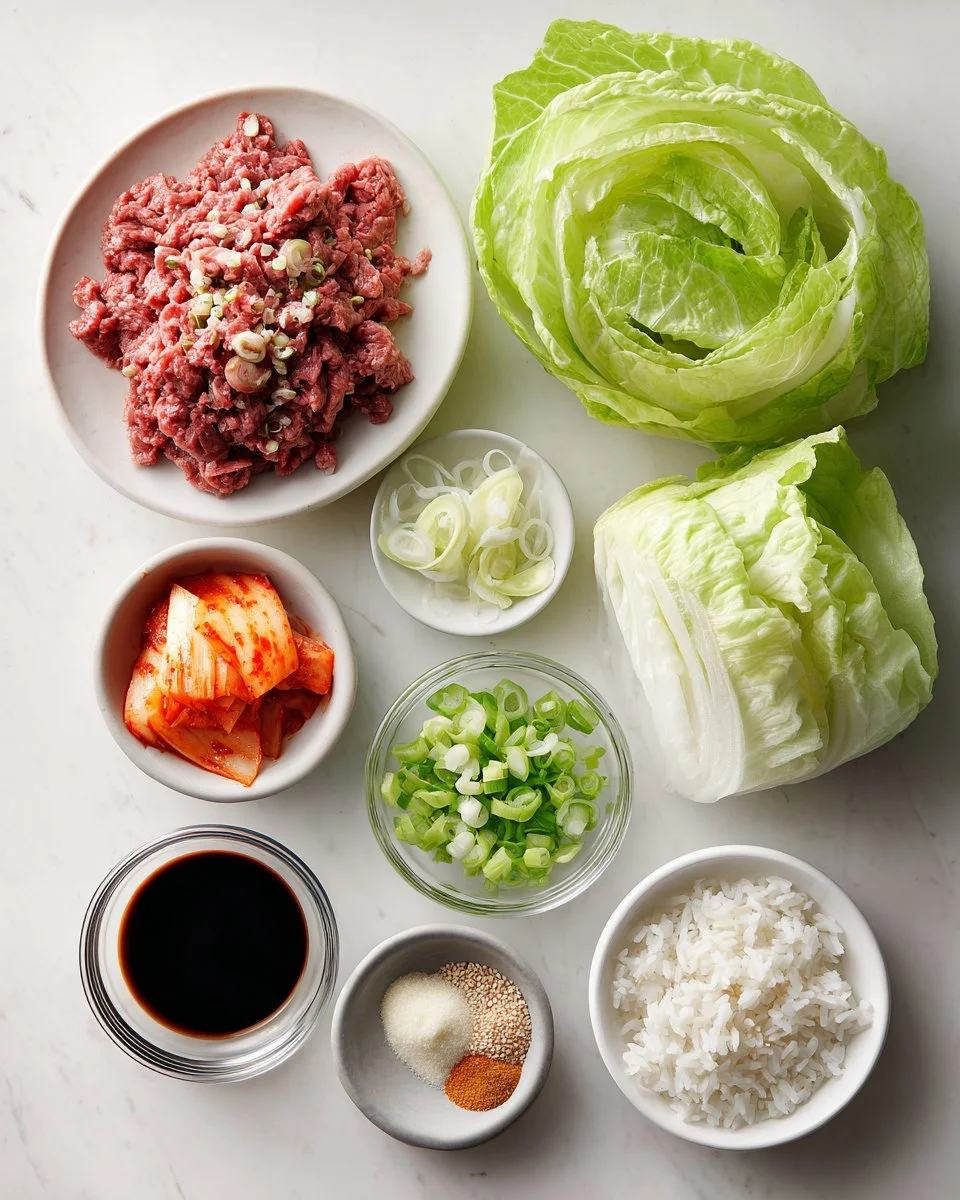
- 1 pound sirloin steak, thinly sliced about ⅛ inch thin (look for marbling for the best flavor)
- Cooking oil for griddle (neutral oils like canola or vegetable work well)
- 1 cup long grain white rice
- 1 head Boston or bibb lettuce, leaves separated (look for bright green, crisp leaves)
- Kimchi for topping (homemade or store-bought for a tangy kick)
- Sesame seeds for topping (adds texture and nuttiness)
- Sliced scallions for topping (freshly cut for the best flavor)
- ¼ cup grated Asian pear, peeled (adds sweetness; you can substitute with grated apple if needed)
- ¼ cup soy sauce (low-sodium options work if you’re watching your salt intake)
- 2 tablespoons light brown sugar (for that rich caramel flavor)
- 4 cloves garlic, minced (fresh is best for flavor)
- 2 teaspoons minced ginger (adds warmth)
- 2 scallions, sliced (for garnish)
- 1 tablespoon sesame oil (enhances the nutty flavor)
- ¼ teaspoon ground black pepper (to taste)
Prep Notes: Make sure all ingredients are at room temperature for better marinating. If you don’t have Asian pear, regular pear or an apple can be a great substitute.
Step-by-Step Instructions
Marinate the Beef: In a resealable Ziploc bag, combine all the marinade ingredients—soy sauce, light brown sugar, minced garlic, ginger, grated Asian pear, and ground black pepper. Shake it up until well mixed. Add the thinly sliced sirloin steak, ensuring it’s evenly coated in the marinade. Let it sit in the refrigerator for at least 3 hours, or for the best flavor, overnight.
Cook the Rice: Rinse the uncooked rice under cool water to remove excess starch, which prevents it from getting too sticky. In a rice cooker, combine the 1 cup of rinsed rice with 1 ⅓ cups of water and cook according to rice cooker directions. For stovetop cooking, combine rinsed rice with water in a pot, bring to a boil, cover with a lid, and simmer on low heat for about 20 minutes, or until all water is absorbed and rice is tender.
Grill the Meat: Heat a large griddle or pan over HIGH heat, adding a drizzle of cooking oil. Once hot, sear the marinated beef slices (shaking off excess marinade) for about 1 to 2 minutes per side. Avoid overcrowding the pan for a perfect sear. If cooking a large batch, do this in batches to ensure optimal heat management.
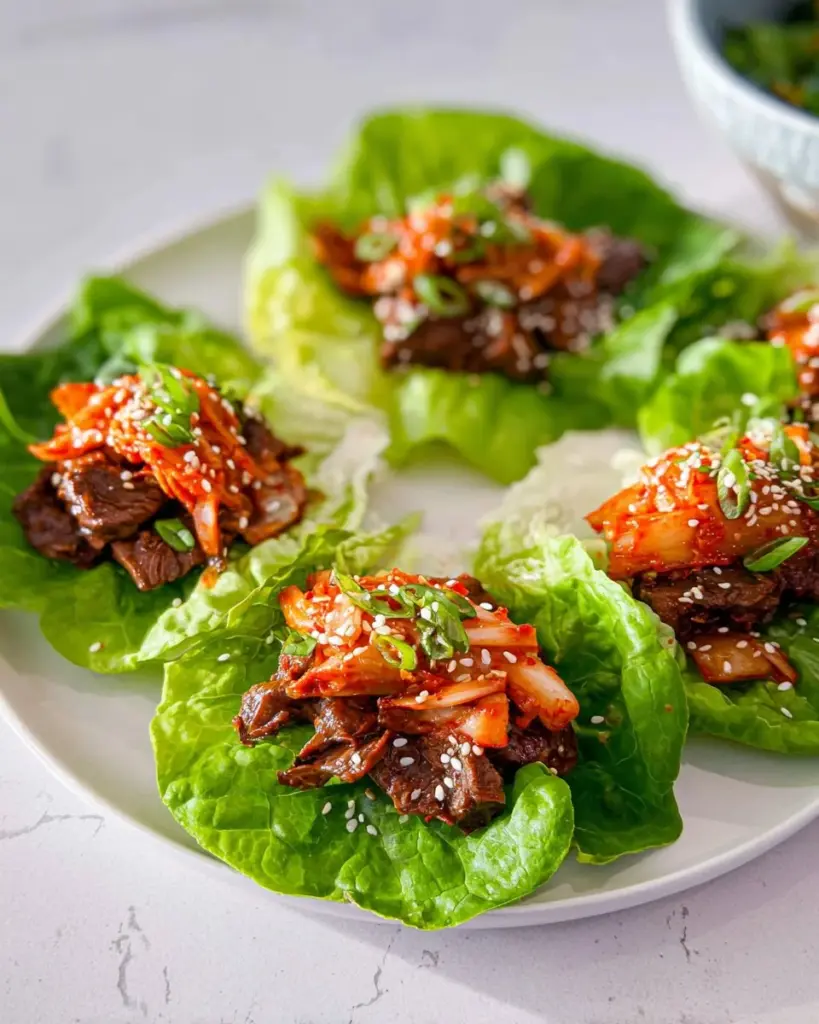
Assemble: Lay out the halved lettuce leaves and place a scoop of rice on each leaf, topped with a few slices of the grilled beef, a spoonful of kimchi, sliced scallions, and a sprinkle of sesame seeds. Serve this dish family-style and let everyone build their own lovely wraps!
Chef’s Tips:
- I recommend using a cast-iron skillet or well-seasoned griddle for the best beef searing.
- If you accidentally over-marinate the beef, it may become too salty; try a short marination for leaner cuts.
Expert Tips & Tricks
Best Storage Methods: If you have leftovers, store the marinated beef in an airtight container in the fridge for up to 3 days. You can also freeze uncooked marinated beef for up to 3 months.
Make-Ahead Instructions: Marinate the beef a day in advance and cook only when you’re ready to serve. Cook the rice ahead of time, too—just reheat it when it’s time to eat.
Troubleshooting: If your wraps fall apart, ensure the lettuce leaves are completely dry before assembly and try a sturdier outer leaf, like romaine.
Serving Suggestions
Serve with a side of steamed vegetables or a simple cucumber salad for a well-rounded meal. For a cozy evening, these Korean Beef Lettuce Wraps are perfect paired with a light beer or a refreshing glass of iced tea. Presentation-wise, consider using a large wooden board for family-style serving, allowing everyone to join in on the wrapping fun!
Variations & Substitutions
Flavor Combinations: Try adding spicy kimchi or a drizzle of gochujang for heat. You can also experiment with using grilled chicken or tofu for a different protein spin.
Dietary Restrictions: For gluten-free versions, swap regular soy sauce with tamari, and you can make it vegan by replacing beef with soy protein crumbles or mushrooms.
Seasonal Variations: Incorporate seasonal produce by adding thin slices of radish, bell peppers, or cucumber for an extra crunch during summer months!
Nutrition & Storage Info
- Total Time: ~ 4 hours (includes marination)
- Yield: 4 servings
- Estimated Calories: Approx. 400 calories per serving
- Storage: Keep in an airtight container in the fridge for up to 3 days. Cooked beef can be frozen for 2-3 months.
FAQ Section
Can I use a different cut of beef for this recipe?
- Absolutely! Flank steak or ribeye also works splendidly. Just ensure that whichever cut you choose is thinly sliced.
Is there a vegetarian option for this dish?
- Yes! Substitute the beef with marinated tofu or tempeh. Just remember to adjust the cooking time accordingly as they may require different heat levels.
How can I ensure my beef is tender?
- Marinating the beef in a combination of soy sauce and Asian pear helps to tenderize it. Slicing along the grain also ensures a more tender bite.
Can I prepare these wraps in advance?
- While it’s best served fresh, you can prepare the components ahead of time, marinate the beef, and store the veggies. Assemble them just before serving.
What kind of lettuce is best to use?
- Boston or Bibb lettuce offers the best texture and flavor, but feel free to use romaine or butter lettuce for a crunchier option.
How spicy are these wraps?
- They are not inherently spicy unless you add kimchi or other spicy toppings. Adjust to your taste!
What if I don’t have sesame oil?
- You can skip it or add a touch of olive oil for a different flavor profile, but it won’t be quite the same.
Is this dish kid-friendly?
- Yes! Small hands can help assemble their own wraps, making it a fun meal for family nights.
Can I grill the beef instead?
- Absolutely! A grill will impart a wonderful smoky flavor and beautiful grill marks.
Do leftovers taste good the next day?
- Yes, but the lettuce will lose its crispness. Store rice and beef separately, and just reassemble fresh wraps!
Conclusion
These Korean Beef Lettuce Wraps are more than just a meal; they’re an invitation to gather, wrap, and enjoy delectable bites of joy with the people you love. Every ingredient works harmoniously together to create a dish that’s bursting with flavor and heartwarming memories. So why wait? Dive into this recipe, let your kitchen smell amazing, and create lasting memories around your table. I’d love to hear your feedback! Don’t forget to check out my other similar recipes, like Spicy Pork Bowls and Irresistibly Sticky Honey Gochujang Chicken: A Flavor Explosion You Can’t Resist!, for more delightful adventures in cooking. Happy wrapping!
Korean Beef Lettuce Wraps
Ingredients
Method
- In a resealable Ziploc bag, combine all the marinade ingredients: soy sauce, light brown sugar, minced garlic, ginger, grated Asian pear, and ground black pepper. Shake until well mixed.
- Add the thinly sliced sirloin steak, ensuring it’s evenly coated in the marinade. Let it sit in the refrigerator for at least 3 hours, or preferably overnight.
- Rinse the uncooked rice under cool water to remove excess starch. In a rice cooker, combine the rinsed rice with 1 ⅓ cups of water and cook according to the rice cooker directions.
- For stovetop cooking, combine rinsed rice with water in a pot, bring to a boil, cover, and simmer on low heat for about 20 minutes, or until water is absorbed and rice is tender.
- Heat a large griddle or pan over HIGH heat and add a drizzle of cooking oil.
- Once hot, sear the marinated beef slices (shaking off excess marinade) for about 1 to 2 minutes per side, avoiding overcrowding the pan.
- Lay out halved lettuce leaves and place a scoop of rice on each leaf, topped with slices of grilled beef, a spoonful of kimchi, sliced scallions, and a sprinkle of sesame seeds.
- Serve family-style and let everyone build their own wraps.